Copilot vs ChatGPT: Is Copilot the Same as ChatGPT?
Compare Copilot vs ChatGPT and answer: Is Copilot the Same as ChatGPT? Learn the key differences in features, models, integrations, and use cases.
Read →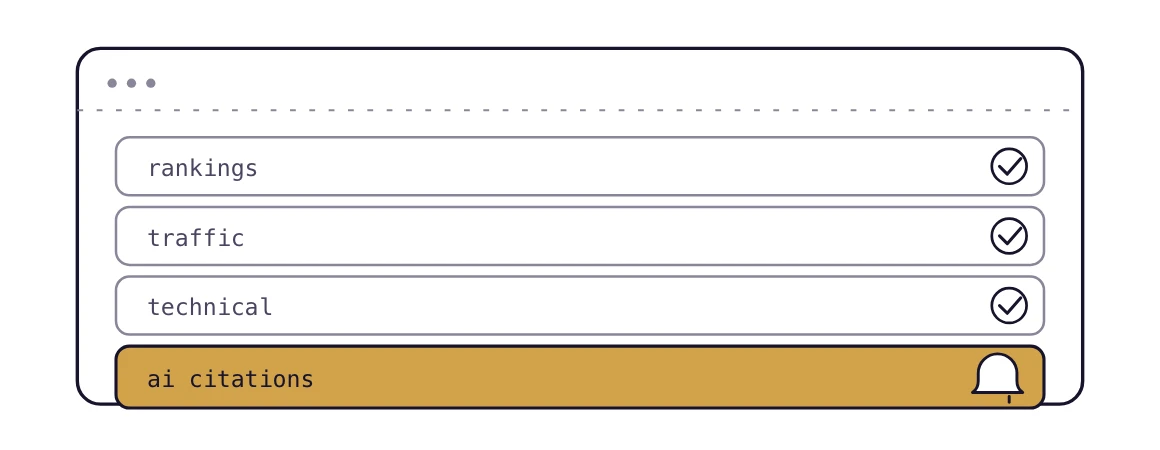
Automated SEO monitoring means using software to track your rankings, traffic, technical health, and AI search visibility on a set schedule, then alert you when something changes. Instead of checking Google Search Console by hand every day, you connect a few tools, set thresholds for what counts as a problem, and let alerts do the watching. Setting it up takes six steps: pick your metrics, connect your baseline data, add rank tracking, automate crawls, build one dashboard, and configure alerts. Most small sites can have a working system running within a single afternoon.
Automated SEO monitoring is the practice of connecting SEO tools to run scheduled checks on rankings, traffic, and site health, then automatically flag changes that need attention. It replaces manual spreadsheet checks with alerts, so you find problems in hours instead of weeks.
Automated SEO monitoring connects tools such as Google Search Console, a rank tracker, and a crawler so they check your site on a schedule and alert you to changes. You stop pulling reports by hand and start reacting to alerts instead.
The system typically watches four areas: keyword rankings, organic traffic, technical health, and, increasingly, visibility inside AI answers. When one of those shifts outside a set range, the tool sends a notification instead of waiting for your next manual audit.
Some teams call this SEO monitoring, others describe it as monitoring SEO — the label doesn't matter, the mechanics are what count: connected tools, a set schedule, and alerts instead of manual checks.
Most automated systems track five categories: rankings, organic traffic, technical errors, backlinks, and AI citation visibility. Before building a full system, it helps to check your website traffic so you know your starting point.
Automating SEO monitoring takes six steps: choose your metrics, connect baseline data sources, add rank tracking, automate crawls, build one dashboard, and set alert thresholds.
Most teams over-build step five. A dashboard with 40 widgets nobody opens is worse than five saved views inside Search Console. Start with three charts, then add more only when someone asks for them. — Alpesh D.
The strongest stack pairs a free baseline, Search Console and GA4, with a paid rank tracker, a crawler, and a tool that watches AI citations. For the AI layer, PilotDeck features show how citation tracking sits alongside the rest of the stack, rather than living in a separate tab.
If you'd rather not assemble this yourself, an SEO monitoring service or application can run the same checks on your behalf — the table below works either as a DIY stack or a shortlist to hand to a vendor.
| Tool Category | Examples | What It Automates | Check Frequency |
|---|---|---|---|
| Search Performance | Google Search Console | Impressions, clicks, indexing status | Real-time data, weekly review |
| Traffic & Conversions | Google Analytics 4 | Sessions, goal completions, engagement | Weekly |
| Rank Tracking | Ahrefs, SEMrush | Keyword position by device and location | Daily |
| Technical Crawls | Screaming Frog, Sitebulb | Broken links, redirects, crawl errors | Weekly, or after major changes |
| AI Citation Tracking | PilotDeck | Mentions inside ChatGPT, Gemini, and AI Overview answers | Monthly |
Do not add a new tool until you can name the alert it will send. "More data" is not a monitoring goal; "tell me within a day if my top 10 pages drop out of the index" is.
Check rankings and traffic weekly, run technical crawls weekly, and review AI citation visibility monthly. Daily checks make sense only during a migration or right after a major algorithm update.
Google makes roughly nine changes to its search algorithm every day, more than 3,200 a year, according to Google's algorithm update history (May 2026). That pace is why weekly checks catch problems that a monthly audit would miss.
No. Automation handles the watching, but a person still needs to interpret alerts and decide what to fix. A tool can tell you traffic dropped 18%; it cannot tell you whether that was a lost featured snippet or a seasonal dip.
Organic click-through rate on queries with an AI Overview fell from 1.76% to 0.61% between mid-2024 and September 2025, according to an AI SEO statistics report (2026). That shift is one more reason to read our GEO optimization guide before deciding which AI metrics to automate.
Do not automate away the weekly human review. Alerts without a scheduled person to read them just pile up unread in an inbox, which defeats the purpose of monitoring in the first place.
A working monitoring setup does not need every tool on the market. Connect your free baseline, add one rank tracker, automate one weekly crawl, and put a person on the calendar to review the alerts. Add the AI citation layer once the basics run without you touching them.
PilotDeck runs this kind of monitoring, including AI citation tracking, as part of its monthly research and publishing cycle, so the alerts feed directly back into what gets written next. That loop is what keeps a site's rankings and AI mentions moving in the same direction.
It is the use of connected tools that check rankings, traffic, and technical health on a schedule, then alert you automatically when something changes. It replaces manual weekly spreadsheet pulls with notifications you can act on the same day.
Connect Search Console and GA4, add a rank tracker and a crawler, put every source on one dashboard, and set alert thresholds for what counts as a problem. Most teams have a basic version running in an afternoon.
There is no single best tool. Most teams pair Search Console and GA4 with a paid rank tracker and a crawler for full coverage. The right combination depends on site size and budget.
Weekly for rankings, traffic, and technical crawls, monthly for AI citation visibility, and daily only during a migration or major update. Reviewing more often than that rarely changes what action you take.
No. Software can watch metrics around the clock, but a person still has to interpret alerts and choose what action to take. Automation removes the checking, not the judgment.
Rankings, organic traffic, technical errors, backlinks, and, for most sites now, visibility inside AI Overviews and chat answers. Weigh each metric against the business outcome it actually predicts.
Usually not. SEO alert tools just send a notification — Slack, email, or a dashboard flag — when a tracked metric crosses a threshold you set. Most rank trackers and crawlers already include alerting, so check what your existing tools support before adding a standalone alert app.
An SEO tracker is any tool that logs your rankings, traffic, or technical health over time so you can see trends instead of one-off snapshots. Rank trackers, crawlers, and full monitoring platforms all qualify — the difference is how many metrics a single tool covers.
Yes — most platforms can schedule weekly or monthly reports pulled straight from the same dashboard data, so you're not rebuilding one from scratch each time. Automating the report is the easy part; deciding what belongs on it is the step most teams skip.
The main ones: catching ranking or traffic drops within days instead of weeks, cutting the hours spent pulling manual reports, and surfacing technical issues before they compound into a bigger crawl problem. The tradeoff is that automation only watches — a person still has to interpret the insight and act on it.

Co-founder, PilotDeck
Alpesh builds the growth engine behind PilotDeck. He has spent years helping startups go from zero traffic to steady organic growth, and now brings SEO, GEO, AI automation and content strategy together in one repeatable system that also gets brands named in AI answers.
Compare Copilot vs ChatGPT and answer: Is Copilot the Same as ChatGPT? Learn the key differences in features, models, integrations, and use cases.
Read →
Compare 5 AI brand monitoring tools to track brand mentions, citations, and visibility across ChatGPT, Gemini, Perplexity, Claude, and other LLMs.
Read →
AI keyword research surfaces the conversational questions people ask ChatGPT and AI Overviews, while traditional keyword research still owns verified search volume. Here's how each works, where each still wins, and how to combine both without wasting your content budget.
Read →Hand over a domain. Research runs and your first article is written within the hour.
Start free trialCancel any month. Your site and content stay yours.