Competitive Keyword Research: Why a One-Time List Isn't Enough
Competitive keyword research reveals gaps your rivals miss, but only works when repeated monthly and turned into content. See how to do it right.
Read →
An AI SEO agency improves how your business shows up in Google and in AI answers like ChatGPT, Perplexity and Google AI Overviews, often using AI for research and drafts. Good ones have a person review the work, show how they measure results and never guarantee rankings.
- What you get: AI SEO services usually cover keyword research, content, technical SEO, GEO and AEO, AI visibility tracking and distribution.
- Who it suits: businesses whose buyers search Google or ask AI tools before they choose.
- What drives cost: content volume, scope, whether fixes are included, AI tracking and reporting.
- Red flags: ranking guarantees, "special" AI files sold as a shortcut and no human review.
- Where PilotDeck fits: monthly research, weekly publishing, a person reviewing every article and AI citation tracking.
Every SEO agency seems to have added "AI" to its homepage. Some changed how they work. Others changed the label. Our SEO and GEO optimization is built for Google and AI answers together, and this guide shows you how to judge any provider, us included.
It covers what an AI SEO agency does, what AI SEO actually means, the kinds of providers, what drives cost, how to measure results, the questions to ask and the red flags to walk away from.
Start with what you are actually buying, because the scope behind the same AI SEO agency label varies a lot from one provider to the next.
An AI SEO agency, sometimes called an AI SEO company, offers AI-powered SEO services that help your business show up in Google search and in AI answers, using AI tools to speed up research and drafting.
Scope varies by provider, so treat this list of AI SEO services as the full menu, not a standard package:
Google's own guide to hiring an SEO now lists "optimizing for generative AI" among the services an SEO may offer, next to keyword research and content development.
The "AI" part of the name is where most of the confusion starts, because agencies use it for two different jobs.
AI SEO means two things: using AI to do SEO work faster, and optimizing your site to appear in AI answers. Providers use the term for either one, so ask which they mean before you compare offers.
The second meaning has other names too. Generative engine optimization (GEO) and answer engine optimization (AEO) both describe getting your content used and cited in AI answers, such as Google AI Overviews, ChatGPT and Perplexity.
That is why providers also call themselves a generative engine optimization agency, an AEO agency, an AI search optimization agency or an LLM SEO agency. Ask what the work involves, because the names overlap.
Google's guide to optimizing for generative AI features says SEO best practices continue to be relevant, because its AI features are rooted in its core ranking and quality systems. In Google's words, optimizing for generative AI search is "still SEO".
What changes is the reporting. AI answers name businesses and cite pages, so a good provider tracks which AI engines mention you as well as where you rank in Google.
Because one label covers everything from AI-drafted blog posts to citation tracking in ChatGPT and Perplexity, the providers selling it look very different too.
There are four main kinds of AI SEO provider, plus two options many businesses weigh against them: an in-house team or doing it yourself with AI tools.
| Option | What you get | Who reviews the work | Best for |
|---|---|---|---|
| Traditional SEO agency using AI | Familiar SEO services, with AI speeding up research and drafts | Agency staff | Businesses that want a classic retainer |
| GEO or AEO agency | Work focused on being cited in AI answers, often on top of existing SEO | Specialist team | Brands that already rank and want AI mentions |
| AI-first SEO agency (managed service) | Software does research and drafting, people review and steer it | A person, before publishing | Small teams that want steady output at a set monthly price |
| AI SEO agent or tool | Software that researches, drafts or audits on its own | You | People with time and SEO skills |
| In-house team | Your own hires using SEO and AI tools | Your team | Companies with an ongoing budget for staff |
| Doing it yourself with AI tools | A chatbot plus an SEO data tool | You | Very small sites with time to spare |
An AI SEO agent is software, not a team. Tools like this rarely handle audits, fixes or GEO and AEO on their own, and they don't decide which pages are worth writing. That judgment is what you pay an agency for.
Against a traditional SEO company, the differences are narrower than the marketing suggests:
| Factor | AI SEO agency | Traditional SEO company |
|---|---|---|
| Keyword research | Usually included | Usually included |
| SEO content | Built in as a core service | Usually included |
| Technical SEO | Varies by provider | Varies by provider |
| GEO and AEO | May be a core service | May be missing or sold separately |
| AI visibility tracking | Often included | Less commonly included |
| Traditional rank tracking | Usually included | Usually included |
| Content distribution | Varies by provider | Varies by provider |
Those differences in scope are also what you end up paying for.
AI SEO services have no standard price; the cost depends on how much work is included, not on the AI label. Providers usually charge a monthly retainer, a fixed monthly plan per site or a software subscription.
Quotes are hard to compare because two providers can use the same name for very different scope. Before you compare prices, check six things:
Ask each provider for a breakdown of monthly output, and whether fixes and AI tracking are in the price or billed on top. That one answer makes two quotes comparable.
As one published example, our plans and pricing start at $97 a month for one site with up to 30 content pieces a month, with no contract and no setup fee. For a closer look at content costs, see our content marketing as a service pricing breakdown.
Whatever you pay, you need a way to see what it bought.
Measure AI SEO by the leads and sales it brings in, with rankings and AI mentions as the signals along the way.
If you already pay for ads, or get traffic but few leads, ask for reporting on leads from organic search, not only rankings and visits. That is the number that shows whether the work is paying for itself.
For a side-by-side look at tracking software, see our guides to the best AI visibility tools and citation analysis tools for AI search.
Knowing what to measure also tells you what to ask before you sign.
Start with your biggest gap, whether that is content, technical fixes or AI visibility, then ask questions that show how the provider really works.
Google's hiring guide suggests similar questions, including asking for examples of previous work, whether the provider follows Google Search Essentials and how they measure success.
Ask to see the exact handoff between AI drafts and human review. If no one can show you where a person checks the work, you are buying a tool, not an agency.
Some answers should end the conversation straight away.
Walk away from any AI SEO provider that guarantees rankings, sells shortcuts or can't show how it measures results.
Once you have ruled out those seven red flags, the right provider depends on whether you run a local firm, a SaaS company or an agency.
The best AI SEO agency is the one whose scope, process and proof match your situation, not the one at the top of a list. Many "best AI SEO agency" lists are published by an agency on the list, so judge on criteria instead.
| Your situation | What to look for |
|---|---|
| Small business or startup with little traffic | Steady publishing, a person reviewing every page, a monthly plan you can stop |
| Local or professional-service firm | Google Business Profile and review work alongside content |
| B2B or SaaS company | Decision-stage and comparison pages, plus tracking of the AI questions buyers ask |
| Paying for ads, or traffic without leads | Pages close to a buying decision and reporting on organic leads |
| Switching from SEO data tools | A provider that does the work, not another dashboard |
| Agency or freelancer | White-label, separate research per client and seats for your team |
Local businesses can see what that profile and review work involves in our local SEO optimization services. For how plans change from one field to another, see our guide to SEO for industries.
If you run an agency yourself, the question changes from which provider to hire to how to offer this to clients.
Agencies and freelancers can offer AI search optimization without hiring a team, as long as each client gets its own research and a person reviews the work.
Your clients will ask the same questions this guide covers, so be ready to show your review step, your monthly reporting and live results. Track rankings and AI mentions per client, not in one blended report.
Our Agency plan covers up to 5 sites with white-label and 5 team seats, at about $180 a site on monthly billing.
Here is how we handle the same work for our own clients.
PilotDeck combines SEO, content, AI visibility tracking and social distribution in one monthly plan, and a person reviews every article on every plan.
Here is what that looked like for one client starting from almost nothing.
KidKarma, a chore app for families, went from about 2 Google clicks a day to 40 in about three months, with no link building.
In the KidKarma team's words: "PilotDeck was a lifesaver for our brand." Read the full KidKarma SEO case study.
KidKarma's result came from steady, reviewed publishing, which is the same test to apply to any AI SEO agency.
An AI SEO agency is worth it when your buyers search Google or ask AI tools before they choose, and you don't have time to research, publish and track the work every month yourself.
Hold off if you can't commit to months of steady publishing, or if your customers mostly come from referrals and walk-ins.
Either way, judge every provider on scope, human review, measurement and proof, not on the AI label. The quickest way to judge us on those four is to see the research for your own site.
Hand over your domain and see your keyword research and first article before you decide anything. Start your 7-day free trial, or see how our monthly method works first.
Research and your first article start within the hour, and you can cancel any month. Questions? Email hello@pilotdeck.co.
AI tools can handle keyword research, drafting and some technical audits. They can't set strategy, check accuracy or decide which pages are worth writing without a person, so the best results come from AI plus human review.
AI SEO agents can research, draft and audit on their own, but they still need a person to set direction and approve what gets published. Treat them as tools that speed up the work, not as a replacement for strategy.
There is no single best one for every business. The right choice is the provider whose services, review process and live results match what you need most, whether that is content, technical fixes or AI visibility.
It varies with how much work you buy, from software subscriptions to managed monthly plans. Compare what each price includes, such as articles per month, fixes and AI tracking, rather than the headline number.
There is no fixed timeline. Google's SEO Starter Guide says some changes take effect in a few hours and others can take several months, so judge progress over months and ask the provider how it will report along the way.
Usually some mix of keyword research, content, on-page and technical SEO, GEO and AEO, AI visibility tracking and reporting. Check which items are in the price and which are add-ons before you compare packages.
Tools fit if you have the time and SEO skills to run them. An agency or managed service fits if you need the research, writing and fixes done for you every month.
A consultant usually gives you strategy and advice while you or your team do the work. An agency does the work. Choose based on whether you need direction or execution.
Not for Google. Google says its Search doesn't use llms.txt files and there is no special schema needed for its AI features, though it's fine to keep these files for other services. Structured data still helps with rich results as part of normal SEO.
Not by itself. Google says appropriate use of AI is not against its guidelines, but using AI to generate many pages without adding value may break its spam policy on scaled content abuse. Accuracy, originality and human review are what matter.
Yes, for businesses whose buyers search before they choose. Google says SEO best practices continue to be relevant for its AI features, so the same work helps you in search results and in AI answers.
Competitive keyword research reveals gaps your rivals miss, but only works when repeated monthly and turned into content. See how to do it right.
Read →
Content marketing as a service explained: what's included each month, how it differs from SEO alone, who needs it, how and what agencies charge
Read →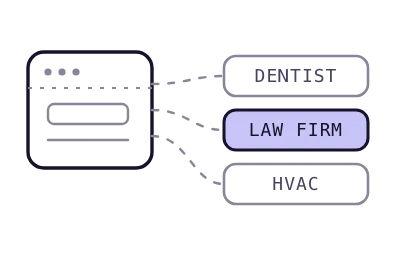
SEO for industries on AI-built sites: what every Lovable, v0, Framer or Bolt site needs, what changes by industry and which businesses need SEO the most.
Read →Hand over a domain. Research runs and your first article is written within the hour.
Start free trialCancel any month. Your site and content stay yours.