How KidKarma got named in 60+ AI answers, at Domain Rating 6
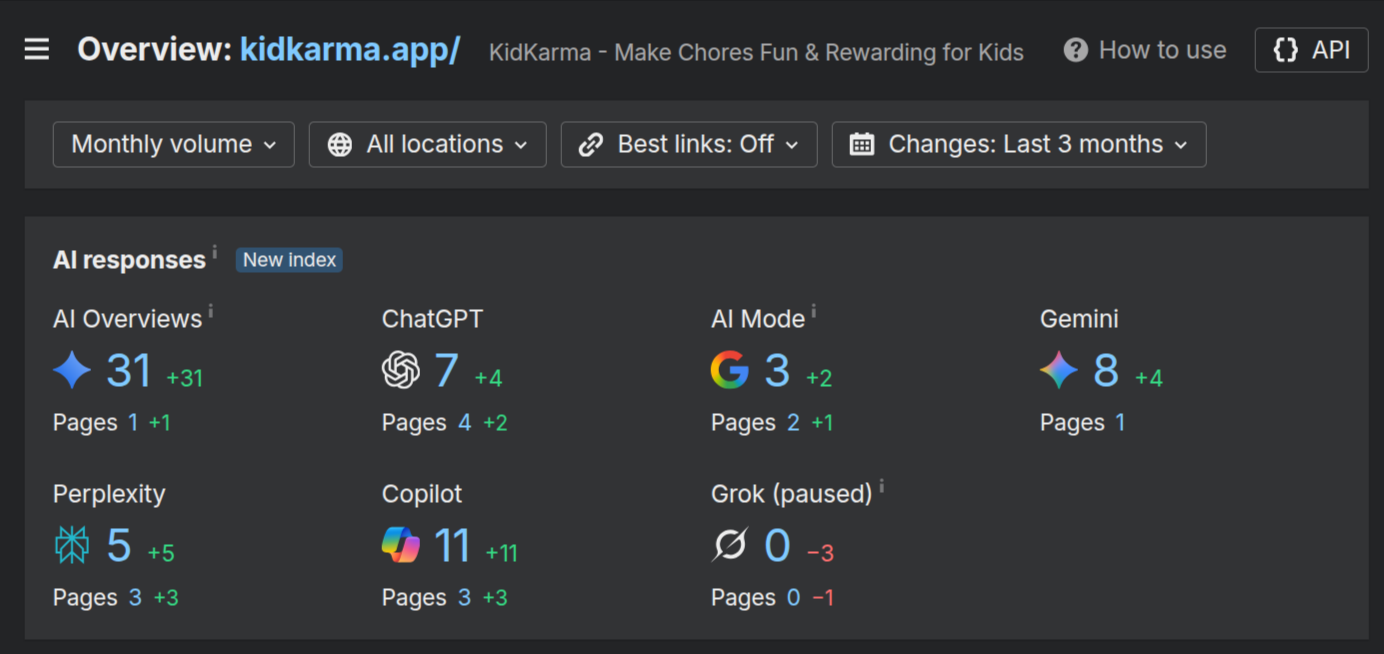
A brand-new app at Domain Rating 6, with no link building. Yet KidKarma is named in more than 60 AI answers across Google, ChatGPT, Perplexity and more, and its Google clicks went from about two a day to forty. Here is the whole story, with the untidy parts left in.
KidKarma is a chore app for families. Parents set tasks, kids complete them for points, and points buy rewards like screen time or a movie night. It is a genuinely useful product with a familiar catch: building something useful does not mean parents can find it. In late April 2026, almost none of them could. The app was new, it had almost no search traffic, and by every standard SEO rule of thumb it was too young to rank for anything worth ranking for.
The challenge: a brand-new site with no authority to lean on
Search advice almost always starts with authority. Build backlinks, raise your Domain Rating, and maybe in a year you will rank. KidKarma had none of that to lean on. Its Domain Rating was 6 and its URL Rating was 0, which is close to the floor. No link-building campaign, no digital PR, no decade-old domain quietly collecting trust. On paper, the honest advice would have been to wait.
Waiting is not a strategy a young app can afford. KidKarma needed to be found by parents at the moment they were searching for help with chores and routines, not twelve months later.
The hypothesis: intent can beat authority, on Google and in the AI answers
So we made a bet. Instead of chasing authority KidKarma did not have, we went after intent it could win. Parents do not search for KidKarma, because they have never heard of it. They search for their problem, in their own words. Our bet was that content matched closely to those searches could do two things at a Domain Rating of 6: rank in Google, and get quoted by the AI assistants that now answer on top of Google. Authority could come later. Intent could start now.
The solution: match what parents actually type, and publish every week
1. Find the searches that matter. We mapped the real, non-branded questions KidKarma's parents type into Google, the ones tied directly to the problems the app solves, and grouped them into a handful of page templates we could publish against on a schedule. We are not listing the specific queries, even though the client agreed we could. Those rankings are KidKarma's competitive asset, not our marketing prop.
2. Write once, for Google and for the machines. We wrote for the parent first and the search engine second, and we wrote a single time for both surfaces. The same articles that rank in Google are the ones AI assistants now quote. No separate "AI content", just content good enough that a machine is comfortable citing it.
3. Let it compound. No spike tactics, no paid push. Publish consistently, keep the pages tightly matched to intent, and let new pages enter the index and start ranking while the older ones keep earning.
The one thing we did not do is the thing most people expect: buy authority. There was no link building at any point.
PilotDeck was a lifesaver for our brand. It was hard to get found in the crowd, but PilotDeck makes it possible with its original content.
The results: KidKarma is named in more than 60 AI answers, at Domain Rating 6
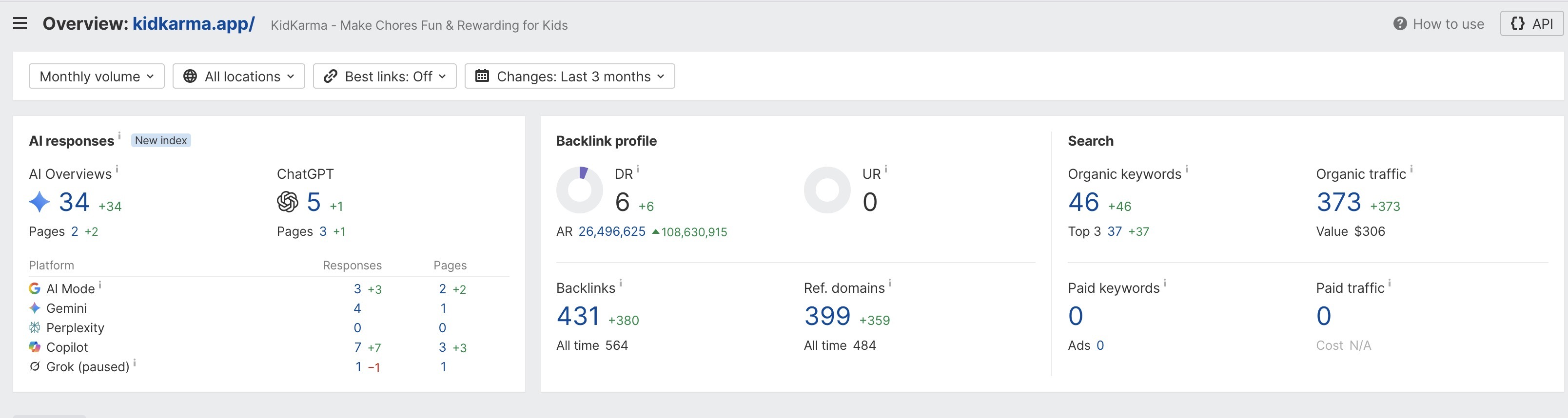
Here is the part a Domain Rating 6 site is not supposed to be able to show. Over the reporting window, Ahrefs recorded KidKarma inside more than 60 AI answers across six platforms. Most of them were Google AI Overviews.
| Platform | Appearances |
|---|---|
| Google AI Overviews | 31 |
| Copilot | 11 |
| Gemini | 8 |
| ChatGPT | 7 |
| Perplexity | 5 |
| Google AI Mode | 3 |
And it is live, not just a counter. Ask Google, ChatGPT, or Perplexity for the best ADHD chore apps for kids, and KidKarma is cited in the answer, sitting next to names far bigger than a DR 6 app has any right to be near.
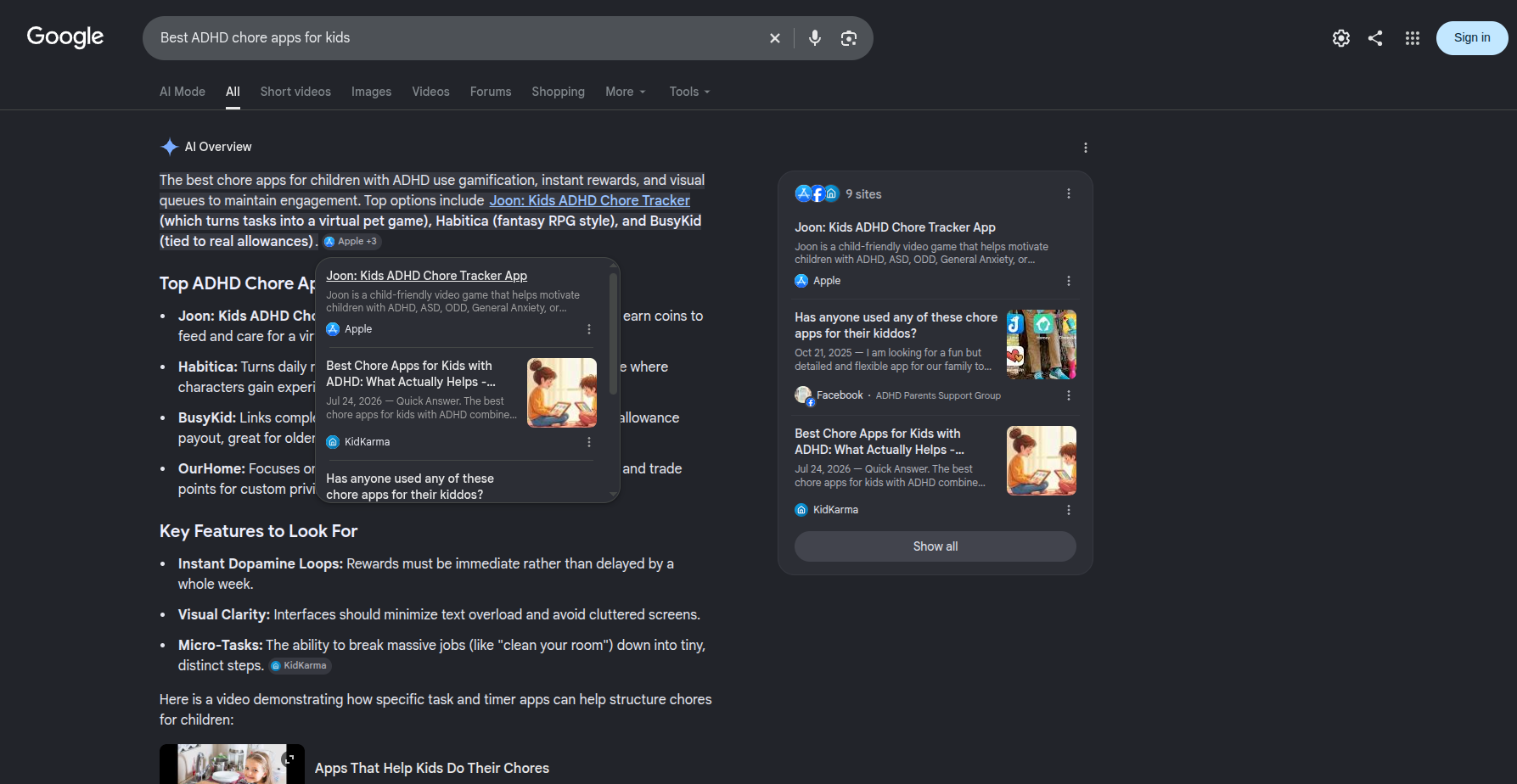
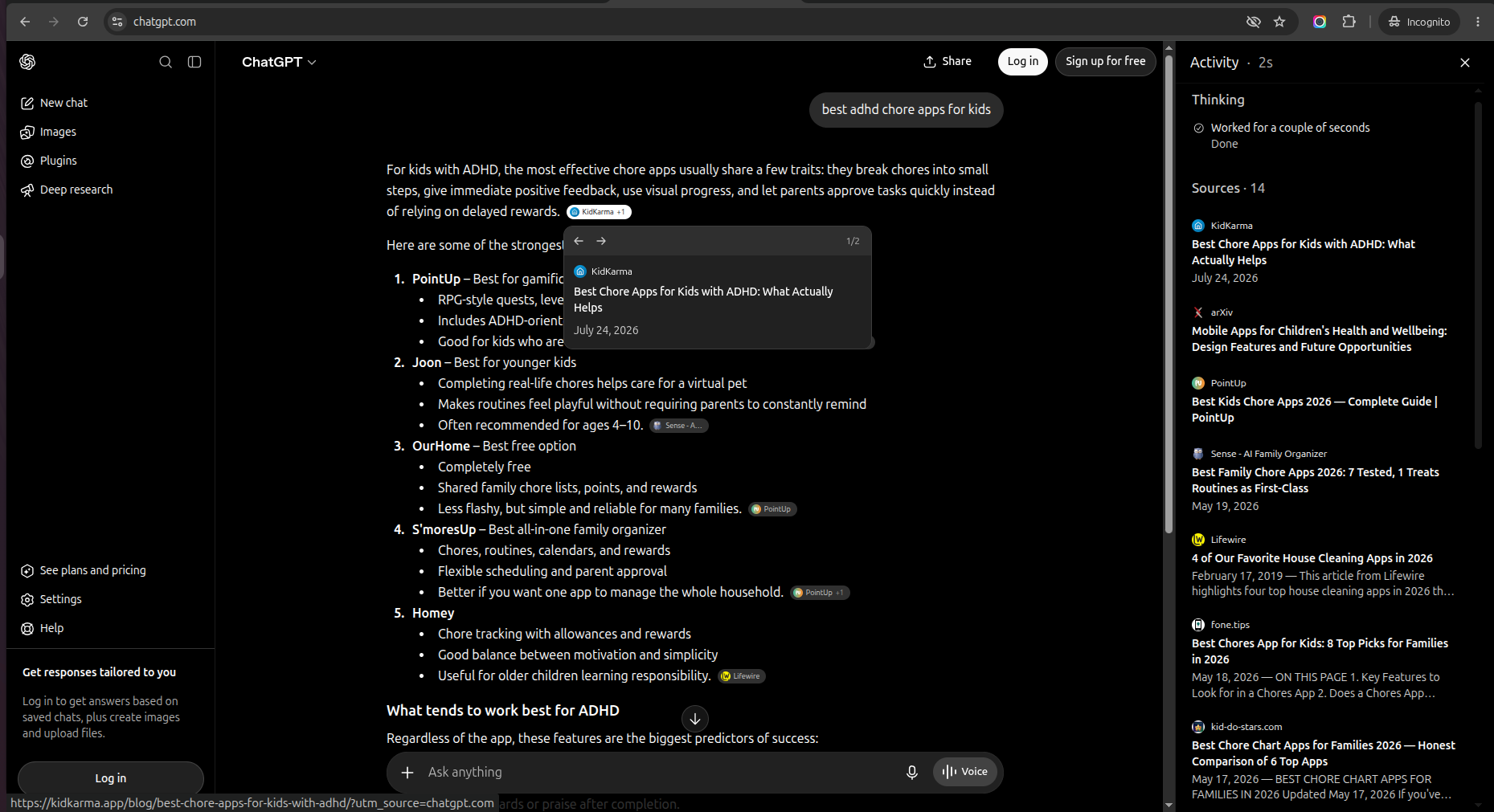
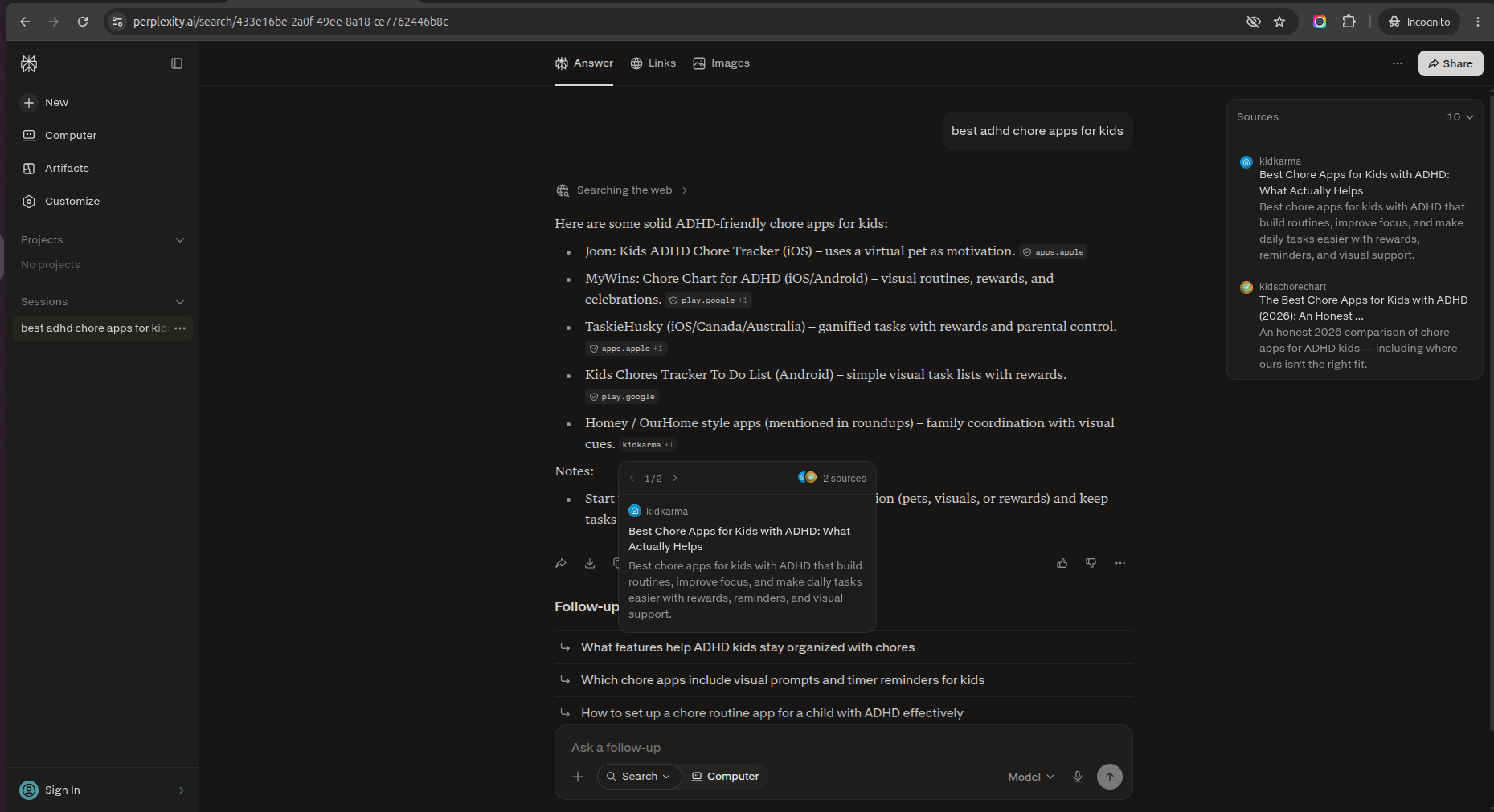
Search is not ten blue links anymore. Parents increasingly ask an assistant for a recommendation before they visit a single website, and KidKarma is the app the assistant names. Same articles, written once, surfacing in Google and in the machines now answering on top of it.
And the clicks followed: about 2 a day to 40
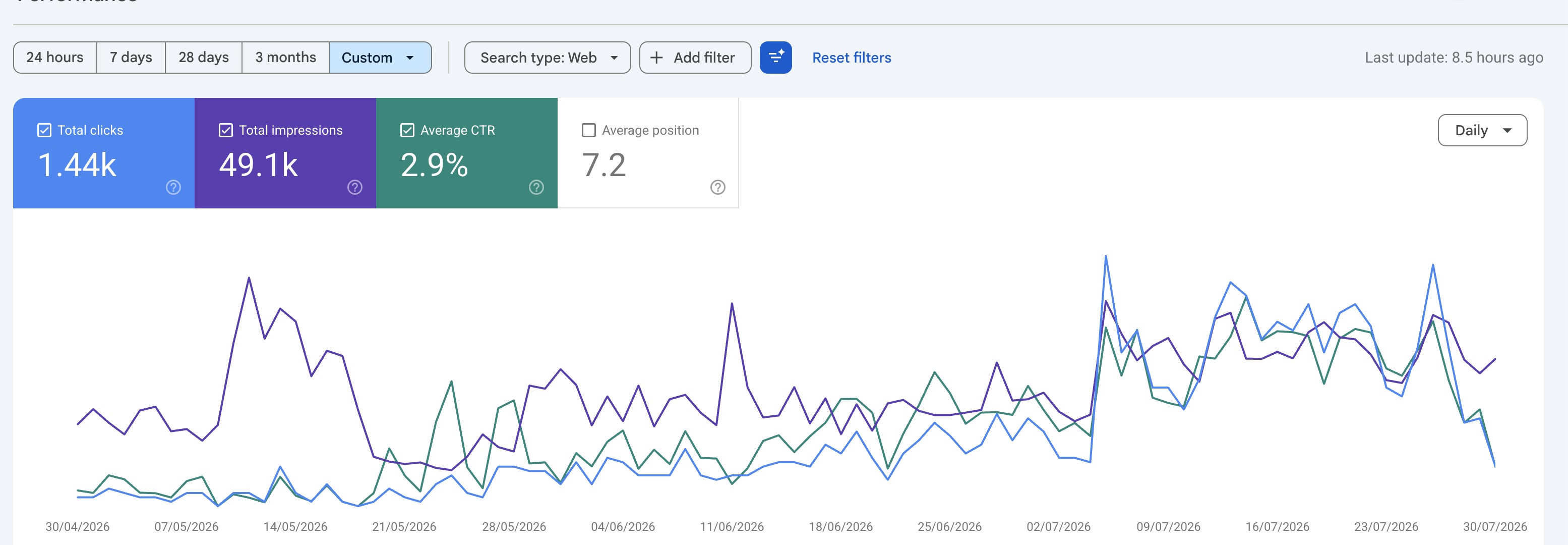
The AI citations did not come at the expense of ordinary traffic. They came with it. In late April, KidKarma was getting about two Google clicks a day. By mid-July it was getting forty a day and holding there, with the best days crossing fifty. All of that inside ninety days.
The number under that number is the one that matters most: almost none of it was branded. Nearly nine in ten of those visitors had never searched for KidKarma. They searched for a problem, in their own market, and found the app as the answer. That is discovery, not a brand collecting its own traffic.
And it was not a lucky spike. The climb is gradual: a slow May, a compounding June, then a clear step up to a higher baseline in July. A spike gives you a screenshot. A new baseline gives you something to build on.
Authority turned out not to be the gatekeeper
KidKarma now ranks in Google's top three for 37 keywords, all while its Domain Rating sat at 6. This does not mean links stopped mattering. It means a young site does not have to wait behind them to start winning. Closely matched content can rank, and get cited, while the domain is still small, and authority can catch up later.
The parts that are not tidy
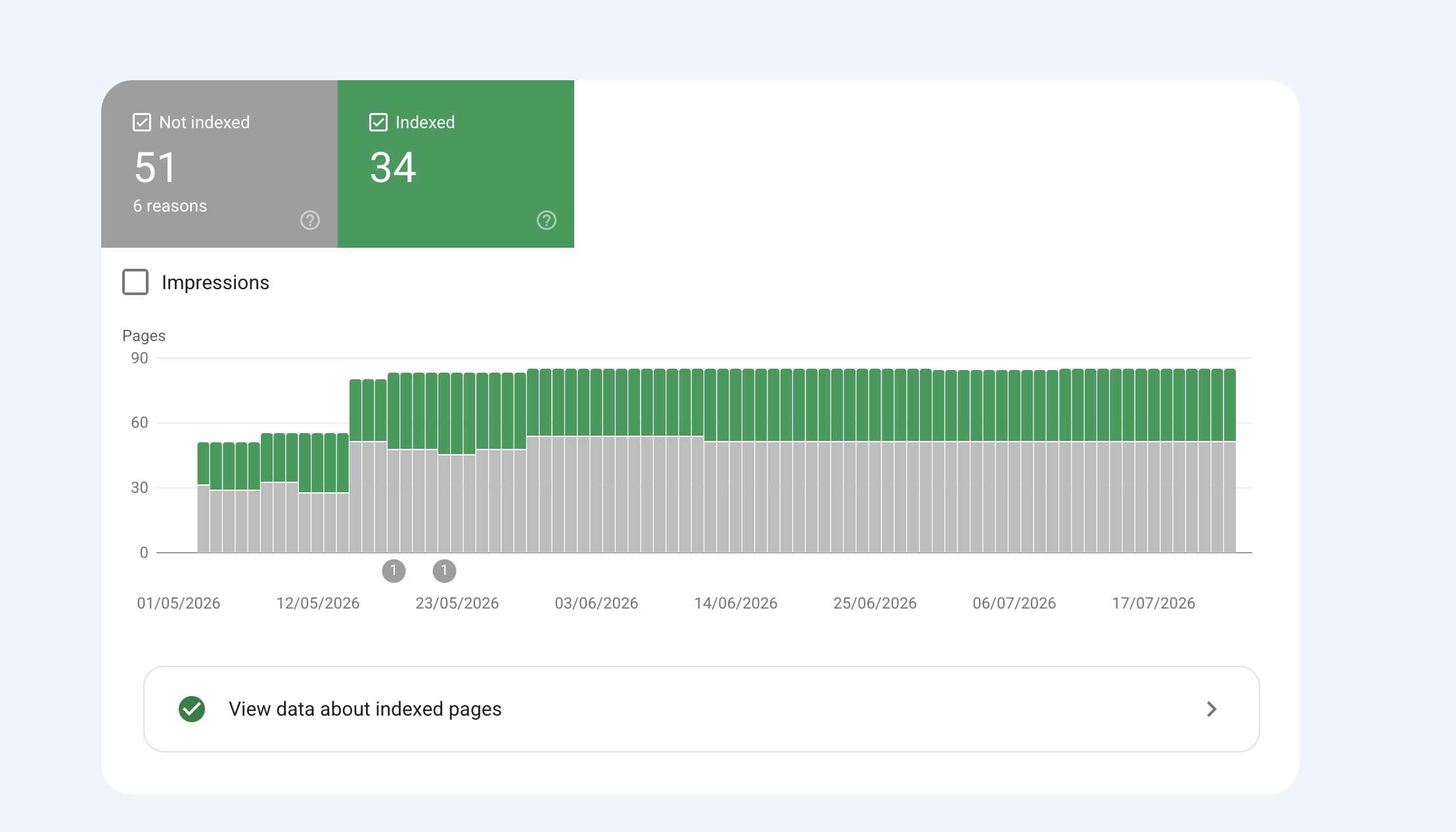
A believable case study should survive the rest of the dashboard, so here is the rest. More of KidKarma's pages are not indexed than are: 34 indexed against 51 that are not. Some of those are ordinary duplicates and utility pages; some are still work in progress, and we are tracking them down rather than cropping them out.
Ahrefs also undercounts the traffic, estimating roughly 373 visits a month while Search Console, the real source, shows more and climbing. Third-party tools lowball growing sites. We quote Search Console as the truth and hand you Ahrefs so you can check the shape of the curve yourself.
What this proves, and what it does not
It proves that a young, zero-authority site in a competitive consumer category can get named across the AI answer layer and climb from two clicks a day to forty inside ninety days, with most of that traffic coming from people who never knew the brand, and without a single backlink campaign.
It does not prove your site gets the same curve. Niches differ, competition differs, starting points differ. What transfers is the mechanism, not the exact numbers: consistent, intent-matched publishing beats waiting for authority you do not have.
Common questions
Can a site grow without building backlinks?
KidKarma did it at domain rating 6 with no link building at all, going from about 2 Google clicks a day to 40 in 90 days. Links help, but content matched to real searches carried this growth on its own.
How did a small chore app get cited by AI assistants?
As a byproduct of ranking. The same articles that grew KidKarma's Google clicks earned 60 plus answers across six AI platforms, including Google AI Overviews, ChatGPT, and Perplexity.
Were people searching for KidKarma by name?
Mostly not. 87 percent of the traffic came from people who had never heard of the app and were searching for a solution to a problem, which is exactly the traffic a new product needs.
How fast did the growth arrive?
90 days from near zero to about 40 clicks a day, and the curve was still climbing at the end of the window. The first articles started earning impressions within weeks of publishing.
Check it yourself
The domain is kidkarma.app. Run it through Ahrefs or any tool you trust.
See what it does before you decide anything.
Hand over a domain. Research runs and your first article is written within the hour.
Start free trialCancel any month. Your site and content stay yours.