75+ Generative AI Statistics You Need to Know in 2026
75 sourced statistics on how fast generative AI is spreading, what it costs, who uses it at work, and whether people trust it, with every figure labeled and linked to its source.
Read →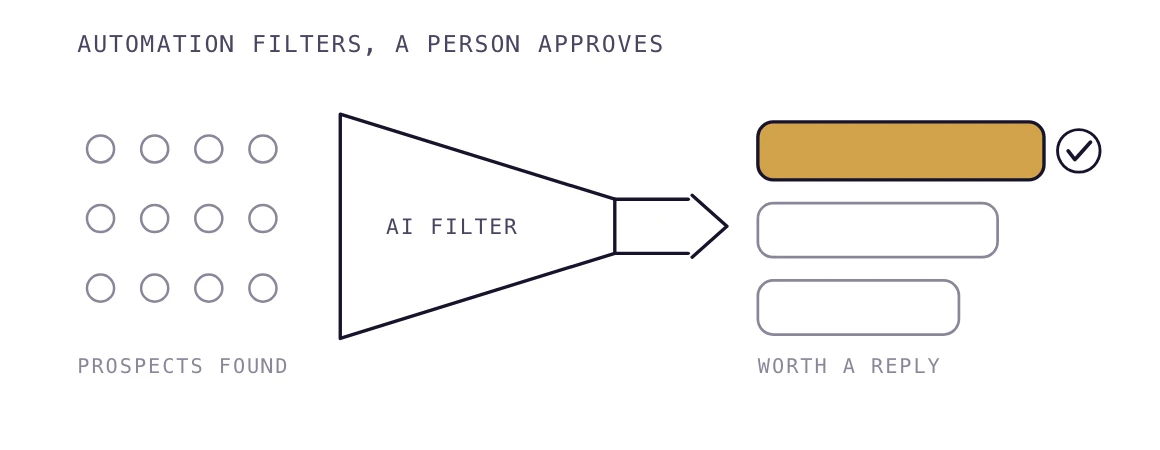
If you have worked even for a minute in SEO. You would know what really goes into building backlinks. It is sheer hard work. Only for most of your emails to be sitting in the recipient's inbox, untouched and unopened.
AI is bringing a wave of change to this. AI tools can now automate the repetitive parts such as prospect research, contact lookup, first-draft outreach, and spam scoring. The final placement decision still rests on a person.
Not only this, tools now scan thousands of pages for topical fit and draft a personalized pitch in seconds, work that used to take an SEO analyst most of the day. The result is not AI replacing humans in this space; it means fewer hours spent on the parts that never needed a human judgment call in the first place. SEO analysts can now spend more time deciding which placements are worth pursuing or not.
AI backlink tools automate finding, evaluating, and pursuing backlink opportunities. It covers prospecting, personalized outreach, and quality scoring, with a person still in loop approving which links actually go live.
Automation has taken over the murky middle of the link-building workflow. The manual and menial parts of finding relevant sites, pulling contact details, and sending a first-touch email. All of these don't need judgment, only hours, and most teams now run it as a background queue instead of a dedicated weekly task.
A person still decides which replies are worth a follow-up and which sites are a genuine fit. That split is why teams now describe automation as a filter, not a replacement. It clears the queue so an editor reviews fifty strong matches instead of five hundred random ones.
AI tools handle four tasks reliably today: prospect research, contact lookup, first-draft outreach writing, and spam or quality scoring. Each one is pattern-based work, which is exactly what machine learning does well, and is junior SEO person's biggest headache.
Negotiation is moving toward automation too, though most platforms still route final terms through a person before a placement is confirmed.
65% of SEOs now use AI for prospecting and outreach personalization, and 83% of link-building platforms score link quality with AI, according to industry link-building data (2026). Screening and first-touch outreach are the two tasks automation owns first, well ahead of negotiation or final placement decisions as they need more human intervention.
AI search systems weigh brand signals over raw link counts. Ahrefs studied 75,000 brands and found branded web mentions correlate with AI Overview visibility at 0.664, versus 0.218 for backlinks (roughly three times stronger, according to Ahrefs' brand visibility study (2026)
That gap changes what a link is for. A backlink placement earns less credit for the link itself and more for putting the brand name on a page an AI model already reads and trusts. We have covered this shift in depth in our GEO versus AEO breakdown.
Automation makes that easier to pursue at scale, since a tool can flag mention-worthy roundups and unlinked citations that a manual search would likely miss. You can also track brand mentions in ChatGPT to see where your brand is already appearing across AI search.
"Backlinks used to be the finish line. Now they're one signal among several an AI model weighs before it decides whether to trust a brand." - JC, Founder, PilotDeck
Automated outreach at high volume can look like spam to webmasters and to search engines when it skips real personalization. Generic AI-written slop gets filtered before a person ever reads them, and reply rates drop hard once a prospect list stops being topically relevant. So be vary of that.
Automating the sending carries low risk. Automating the link itself, by buying placements or scripting anchor text at scale, is what draws penalties from search engines. The tools do the finding; people still decide what is safe to publish, and that division is what keeps a link profile clean over time.
Automating outreach isn't what draws a penalty. Automating the link - buying placements or scripting anchor text at scale - is. Keep a person in the loop for every link before it goes live.
Fast teams let AI handle prospecting, contact lookup, and first-draft pitches, then route every reply through a person before a link goes live. That single checkpoint catches mismatched sites and thin content automation misses, and it takes minutes rather than the hours manual prospecting used to cost.
The same rule applies to reporting. Automation can flag a placement as live, but a person needs to confirm if the anchor text and surrounding context still match the pitch that was approved. Skipping that check is how a clean campaign turns into a cleanup project.
The two approaches differ most in speed and personalization, not in whether the resulting links hold up. Most agencies now run a blend rather than picking one column exclusively.
| Factor | AI-Assisted Backlink Building & Placement | Manual Backlink Building & Placement Placement |
|---|---|---|
| Prospecting speed | Hundreds of sites scanned in minutes | Hours per batch, one by one |
| Personalization | Template drafted, lightly edited per prospect | Fully custom, written by hand |
| Quality screening | Automated spam and DR scoring | Manual review, slower but contextual |
| Negotiation | AI-drafted terms, human approval | Fully human, relationship-based |
| Best fit | High-volume campaigns and agencies | Niche, relationship-heavy outreach |
AI link placement is the use of automated tools to find, score, and pursue backlink opportunities, covering prospecting, personalized outreach, and quality screening, with a person approving the final placement. It replaces manual list-building, not editorial judgment.
AI removes the manual search-and-contact work from link building. Analysts now review AI-shortlisted prospects and approved drafts instead of building lists and writing every pitch from scratch, which shifts their time toward relationship management and quality control.
Not the whole process. AI can prospect, contact, and draft outreach on its own, but final approval of which link goes live, and with what anchor text, stays with a person on most teams. Fully hands-off pipelines exist, but they carry more spam and penalty risk.
AI screens thousands of sites for topical fit and spam risk in minutes, a task that took analysts hours per batch. That speed lets teams review more real opportunities instead of spending most of the week just building the prospect list.
It is effective for prospecting and screening, where 83% of link-building platforms already apply AI scoring. It is less reliable for judgment calls like site fit and long-term relationship value, so most teams pair it with human review rather than running it alone.
Unlikely in the near term. Search engines penalize automated links, not automated outreach, so teams that keep a person approving each placement retain an advantage over fully automated pipelines. That gap is likely to persist as detection systems get better, not worse.
75 sourced statistics on how fast generative AI is spreading, what it costs, who uses it at work, and whether people trust it, with every figure labeled and linked to its source.
Read →
See what b2b seo services actually include, tools vs agencies vs hybrid, plus a month by month checklist, read on to find the right fit for your budget.
Read →
Compare digital marketing agencies for startups, SEO-only vendors, and AI-native visibility partners to decide what fits your launch stage.
Read →Hand over a domain. Research runs and your first article is written within the hour.
Start free trialCancel any month. Your site and content stay yours.