Copilot vs ChatGPT: Is Copilot the Same as ChatGPT?
Compare Copilot vs ChatGPT and answer: Is Copilot the Same as ChatGPT? Learn the key differences in features, models, integrations, and use cases.
Read →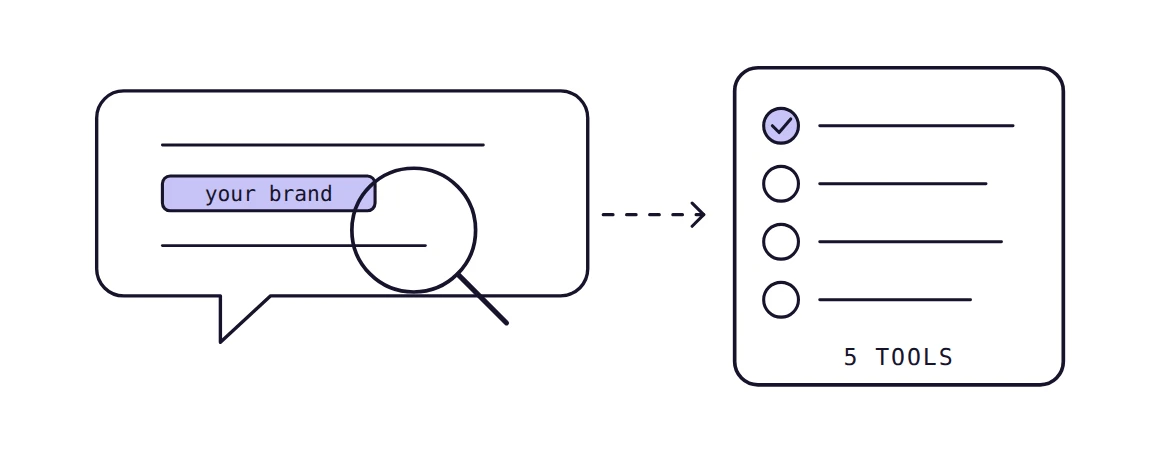
An AI brand monitoring tool tracks what ChatGPT, Perplexity, Gemini, and Google AI Overviews say about your brand, then reports mentions, sentiment, and citations in one dashboard. This guide compares five: PilotDeck, Otterly.AI, Profound, SE Visible, and Amplitude AI Visibility. Each runs real prompts through live AI assistants and logs whether, where, and how a brand gets named, the difference between them comes down to which engines they cover, how deep the reporting goes, and whether they stop at reporting or help close the gap they find.
AI brand monitoring is the practice of running real buyer questions through AI platforms on a set schedule, then logging whether your brand appears, in what context, and which competitors show up instead.
A growing share of buyer research now happens inside a ChatGPT answer, a Perplexity summary, or a Gemini and AI Overviews response, not on a results page you can rank on. A dedicated AI brand monitoring workflow tracks that directly, including ChatGPT visibility, because it treats each AI engine as its own system with its own sources and blind spots, not a variant of Google you can audit the same way.
The best AI brand monitoring tool is judged on how accurately it tracks what an AI engine mentions, cites, and describes about a company, not on how many logos sit on its homepage.
These two terms get used interchangeably, and that's causes confusion and leads you to selecting the wrong tool.
AI search monitoring tracks what real users actually see when an AI platform answers a live query: the mention, the citation, and the exact source URL it pulled from.
LLM monitoring on the other hand probes a model's underlying training knowledge directly, with no citation trail and no guarantee that a live user session would ever surface that answer.
Most brands need the first kind. If a tool can't show you a citation and a source URL, it's likely reporting on what a model knows in the abstract, not on what a buyer sees in a real answer.
More buyers now ask AI assistants for software recommendations before they open Google, which makes a mention inside those answers worth as much as a top-three organic ranking. ChatGPT has reached 900 million weekly active users, according to OpenAI's user milestone announcement (February 2026) - near-Google scale reach your brand may currently be invisible to.
Every tool on this list will show you a dashboard. The differences that actually matter show up when you ask these four questions:
Run any tool on this list through those four questions before you commit a budget line to it.
A brand can be named in an AI answer while the AI's actual source link points somewhere else entirely, often to a competitor's page. Mention count, citation, and referral traffic are three different things, and a dashboard that only reports the first one is telling you less valuable information than it might appear. If you're evaluating a tool, ask specifically whether it separates these three, not just whether it "tracks mentions."
Regardless of which tool you pick, a serious platform covers four layers on one report:
"Most 'AI visibility' dashboards stop at a number. The ones worth paying for tell you which sentence to fix."
A tool that only counts mentions is half a product. The count matters less than whether you can act on the gap it finds before the next content cycle. — JC., Co-founder, PilotDeck
| Tool | Starting Price | Engines Tracked | Best For |
|---|---|---|---|
| PilotDeck | Free Trial + paid plans | ChatGPT, Perplexity, Claude, Gemini, AI Overviews | Tracking + content fixes, one platform |
| Otterly.AI | Free tier + paid plans | ChatGPT, Perplexity, Gemini, Copilot | Country-level tracking |
| Profound | Custom quote | 10+ engines incl. ChatGPT, Claude, Perplexity, Gemini | Enterprise, multi-engine coverage |
| SE Visible | $99/mo | ChatGPT, Gemini, Google AI Mode/Overviews, Perplexity | Executive-ready visibility score |
| Amplitude AI Visibility | Part of Amplitude suite | ChatGPT, Claude, Perplexity, Gemini | Teams already inside Amplitude |
PilotDeck
PilotDeck folds AI brand monitoring into the same system that already handles a site's content and technical SEO, so a citation gap shows up next to the article that can close it — mentions, sentiment, share of voice, and citations across ChatGPT, Claude, Perplexity, Gemini, and AI Overviews, logged against whatever content or fix was published that week. It's a fit for teams that want tracking and the fix that follows it in one workflow, rather than a separate report they have to hand off elsewhere.
Otterly.AI checks brand mentions against the live web interface of each AI platform rather than an API sandbox, and it's built to follow customers in specific countries rather than report from one global view. That regional depth suits agencies managing brands across several markets, though it leans toward reporting over the content fixes a gap actually needs. Our AI visibility tools guide covers how it compares on engine coverage.
Profound built its name on enterprise-scale tracking across more than ten engines, including ChatGPT, Perplexity, Gemini, and Claude, with reporting depth larger marketing teams expect. It closed a $96 million Series C at a $1 billion valuation in February 2026, funding visible in its dashboard polish and API access. The trade-off is price: it's built for a dedicated AI-visibility budget line, not a founder checking mentions between other jobs.
Enterprise-tier AI monitoring platforms like Profound often require a custom quote before you see a number. If a fixed monthly price is what gets budget approved, that alone can rule a tool out before engine coverage does.
SE Visible, SE Ranking's standalone AI visibility product, tracks ChatGPT, Gemini, Google AI Mode, Google AI Overviews, and Perplexity, presenting the result as a visibility score built for an executive dashboard rather than deep technical exploration. Its entry plan runs $99 a month for 200 prompts across three projects, closer to PilotDeck's price than Profound's. It won't tell you which page to fix - the gap a tightly integrated platform is built to close.
Amplitude AI Visibility monitors ChatGPT, Claude, Perplexity, and Google Gemini with automated accuracy verification, checking not just whether a brand is mentioned but whether the AI got the details right. It sits inside Amplitude's broader analytics suite, so teams already there get AI monitoring without a new login. PilotDeck takes the opposite approach: instead of one more dashboard, it ties the same tracking directly to the fixes that close the gap it finds.
Pick PilotDeck if tracking and content fixes need to live in one system. Pick Profound for enterprise engine coverage. Pick SE Visible for an executive-ready score at a lower price. Pick Otterly.AI for country-level tracking. Pick Amplitude if the team already lives inside Amplitude's analytics suite.
How to DIY AI Brand Monitoring Without a Tool (Yet)
If you're not ready to commit a budget line, you can approximate this manually. Pick 10–15 real buyer-intent prompts in your category. Think of the question a prospect would type before they've heard of you. Run each one against ChatGPT, Perplexity, and Gemini once a week, and log three things for each: whether your brand was named, whether a competitor was named instead, and whether either of you was actually cited with a source link.
This gets tedious fast past two or three engines and a handful of prompts, which is exactly the point where a dedicated tool starts paying for itself instead of costing time.
Pick PilotDeck if tracking and content fixes need to live in one system. Pick Profound for enterprise engine coverage. Pick SE Visible for an executive-ready score at a lower price. Pick Otterly.AI for country-level tracking. Pick Amplitude if the team already lives inside Amplitude's analytics suite.
Picking an AI Brand Monitoring Tool comes down to one question: does it just show where a brand is missing, or help close the gap? PilotDeck was built around the second answer, with the other four tools above worth a look for a different mix of engine coverage, price, or reporting depth.
Most tools here run on a paid tier because live prompt-testing across several engines has a real cost. A handful, including Otterly.AI, offer a limited free or trial tier for basic mention counts.
SEO tracking measures ranking positions and clicks inside Google's results. AI brand monitoring measures whether an AI system mentions, cites, or recommends a brand inside a generated answer, where there's no results page to count.
At minimum, ChatGPT, Perplexity, Gemini, and Google AI Overviews, since these carry the largest share of AI-driven buyer research. Claude and Copilot are worth adding once the core four are covered.
Weekly is the practical floor. Answers can shift after a model update or a competitor's content push, and a monthly check misses that window.
Most only report. PilotDeck is built to close that loop, since content and technical fixes run through the same platform that finds the gap.
No. Pricing now starts under $100 a month at the small end (SE Visible, PilotDeck's base plan) up to enterprise contracts (Profound), so team size doesn't decide whether it's worth doing.

Co-founder, PilotDeck
Jignesh (JC) brings years of experience in software development, building scalable web applications and data-driven products. He leads the engineering behind PilotDeck, turning AI and emerging technology into practical tools that help businesses get found.
Compare Copilot vs ChatGPT and answer: Is Copilot the Same as ChatGPT? Learn the key differences in features, models, integrations, and use cases.
Read →
AI keyword research surfaces the conversational questions people ask ChatGPT and AI Overviews, while traditional keyword research still owns verified search volume. Here's how each works, where each still wins, and how to combine both without wasting your content budget.
Read →
Find out how much social media marketing agencies charge in 2026, including monthly retainers, services, pricing models, ad costs, and what affects fees.
Read →Hand over a domain. Research runs and your first article is written within the hour.
Start free trialCancel any month. Your site and content stay yours.